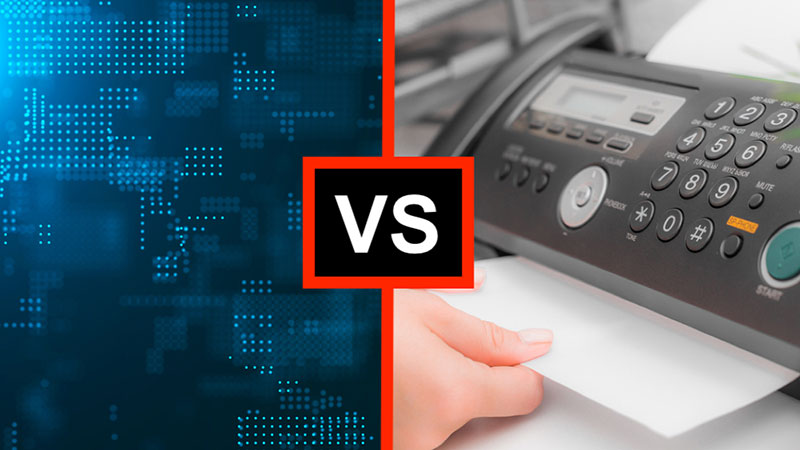
The Difference between Fax and eFax: Why Take Fax Online?

Fax machines aren’t your only option for sending fax documents anymore. eFax provides a new solution to a centuries-old system. But what are the differences between fax and eFax? Is it worth moving to new technology?

Article overview:

What Is eFax?

eFax is a completely digital fax system that allows businesses to send fax documents over the internet.

There is no fax hardware required, nor do you need special setups. Fax is sent from your computer, smartphone or tablet using our online solutions.

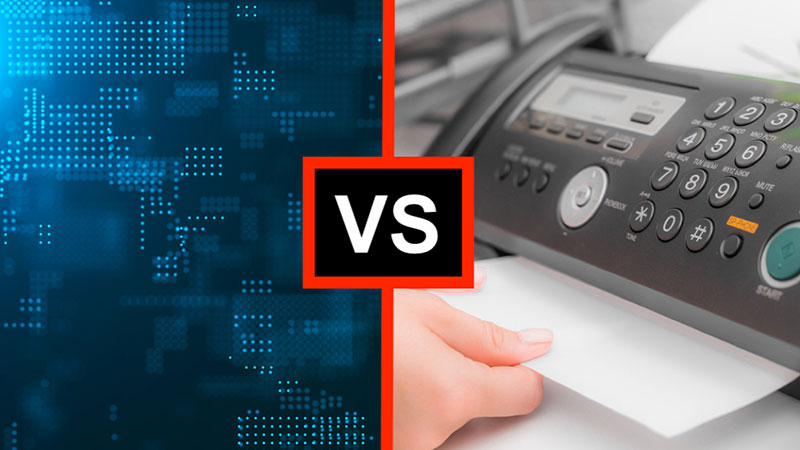
The Difference between Fax and eFax

Through the use of digital technology, eFax can offer a range of solutions that fax machines cannot. It can also provide numerous benefits over the legacy hardware.

Faster communication, less downtime and more cost-effective solutions for your business. These are all advantages to be gained from eFax.

Learn More! Read the Full Story Below

What Is eFax?

We all know what a fax machine is and what it does, but what about online faxing? Before we can look at the difference between fax and eFax, it’s important to understand what eFax actually is. eFax is both a brand and a term used to describe online or “electronic” faxing. Both offer the same solution: faxing over the internet.

Online faxing is a straightforward practice that eliminates the need for the legacy fax machine. It allows you to send and receive fax documents over the internet using phones, computers and tablets. Instead of transmitting physical paper files, our system operates using digital documents like PDFs. You upload your document to your eFax account and send it using our custom-built online portal. This process means you don’t have to print off documents to fax them. However, if you want to fax a physical document, you can always capture it using smartphone cameras for easy upload to our service.

The Difference between Fax and eFax

Now that it’s clear what online faxing is, we can look at the difference between fax and eFax:


Fax Machine

eFax

Flexibility

Immobile and heavy hardware units that often require landline connection to operate

Accessible anywhere with an internet connection. Allows for flexible and remote faxing

Resources

Requires ink, toner, paper and maintenance, resulting in high costs from regular usage

A totally digital format that only requires access to digital devices. Low cost and light on resources

Features

The ability to send and receive fax documents from other fax machines

Large file transfers, submits fax to multiple recipients, simultaneous access for several users and more

Legal Uses

Send and receive legal documentation through submission of signatures and reliable date stamps

Send and receive legal documentation through electronic signatures and date stamps

Scalability

Purchase machines and find office space for new units to increase fax volume. Or remove old and unused units if volume decreases

Immediately purchase a higher number of online fax credits to keep up with demand, or reduce subscription size to fit your needs

Document Management

Print and store all required documents in physical units such as filing cabinets

Save and archive received and sent documents on secure cloud servers for easy access

Security

Limited security options, leading to the potential for unauthorised third-party access

Advanced encryption, live security monitoring and access controls to files

The Benefits of Online Fax over Fax Machines

The above highlights the difference between fax and eFax, and the disparities in the technology that now exists. Old-fashioned fax machines were unrivalled in their day. But developments in digital solutions now mean online faxing offers a much more viable fax system for businesses. Switching from legacy fax machines to eFax means you can better support your brand’s communication goals through these powerful benefits:

  • Superior Document Access

    Old-fashioned fax machines create physical files. These files need to be stored if useful or disposed of if not. This situation creates either unnecessary waste or the need for facilities to house the documentation. Physical files are then easy to misplace or damage. The answer to this could be to upload fax into a computer system for more manageable storage. But then, why not just use eFax instead? All files sent and received via eFax are stored online for instant access and management. Make referrals to important documents simple and straightforward, with no risk of files getting lost. Disposal is also as easy as clicking delete.

  • Increase Data Security

    Fax machines were designed in the 1800s and made popular in the 70s. But while innovative for their time, they are not built for modern data security threats. Fax machines are easy to hack and come with a wealth of other problems, such as the increased risk of human error and a high chance of unauthorised file access. These risks can create major problems for businesses, especially in light of new GDPR laws. eFax, however, features a wealth of security benefits that help to secure your documents and bring fax data security in line with 21st-century demands.

  • Enhanced Workplace Flexibility

    Remote and flexible working is becoming an ever-present part of the modern office environment. With the rise of remote working comes a need for solutions to facilitate the demand. Fax machines are not supportive of flexible work. They are not mobile or remotely connective. eFax, however, is a completely remote experience. You can send online fax from anywhere you have an internet connection, which means flexible working becomes easy for anyone who needs to send fax as part of their job.

  • More Advanced Fax Transmission

    eFax is not just faxing done online. The difference between fax and eFax goes far beyond that. Online fax solutions come equipped with numerous new features and functionality unattainable through the use of legacy fax machines. Included in these features are options like allowing multiple members of staff to access fax solutions at any one time — instead of having to queue to send a fax or print a document. You can also send a fax to multiple recipients at once, rather than having to submit one by one.

  • Lower Running Costs for Your Business

    Let’s be honest, all the above benefits might sound great, but for many businesses, making any change can ultimately come down to cost. If a fax machine is cheaper than digital faxing, you’ll likely stick to the former. eFax is actually a much more cost-effective solution for your business. Monthly subscription costs are low, and there are no additional fees. You don’t have to pay for the resources required to send paper fax. You also don’t need to pay for fax numbers, phone lines, maintenance and the actual costs of the units themselves.
What Is Online Faxing? How Internet Faxing Works

Often described as the future of faxing, online faxing is new-age technology that takes everything you know about fax and effectively makes it better. But how does it achieve this and what is online faxing? Our blog will explain the ins and outs of what online faxing is and how incorporating it into your business could result in substantial benefits.

Article overview:

What Is Online Faxing?

Online faxing is the replacement of the fax machine. It is a digital tool that enables the submission and reception of fax documents through the internet.

There is no fax machine hardware involved at all. All fax communication is carried out using an online portal, which can be accessed by smartphones, computers or the eFax fax app.

Why Make Online Faxing Part of Your Business?

So what is online faxing? It’s the upgrade to fax processes that your business needs. Continue to send fax messages to customers, clients and partners without the need for archaic fax machine hardware.

Take advantage of an internet fax service like eFax and support new opportunities for business growth. Online fax has the potential to help your business develop in new and exciting ways.

Learn More! Read the Full Story Below

What Is Online Faxing?

The question of “what is online faxing” is something we’re often posed here at eFax. The answer is very simple:

Online faxing is a replacement system for legacy fax machines. It is a service that allows your business to send and receive fax documents online through your email, our online portal or the eFax fax app. These submission platforms can be accessed using both smart devices and computers. You don’t need a traditional fax machine at all — you can fax using modern technology exclusively over the internet.

eFax: How Does It Work?

Again, the answer is actually very simple.

eFax uses cloud technology to transmit digital files between businesses. You access our services through whichever platform you choose — email, online portal, fax app or a combination of the three. You can then write your fax message and attach digital fax documents to it. This is like feeding physical paper into a fax machine, but instead, your fax is uploaded as a digital file. If you want to send a physical file, you can capture it using a smartphone camera and upload it as an image. eFax also has additional features, such as the ability to send files to multiple recipients and electronic signature functionality.

While this all sounds like a slightly advanced email system, eFax presents some key and important differences between fax and email.

The biggest difference is that you can use our online fax services to send documents directly to a fax machine. You can also have fax documents sent to your eFax digital account from a traditional fax machine. Email is incapable of performing this action. This process is achieved through custom eFax document converter tools that ensure files submitted by both digital systems and physical fax hardware are compatible with the recipient’s technology.

What Is Online Faxing Going to Do for Your Business? The Five Core Advantages

By introducing eFax services into your business, you also introduce a range of benefits that can help transform many aspects of your company. These benefits are unavailable through the continued use of traditional fax machines. But what are these core advantages?

  1. Flexibility

    The fax machine is immobile and inflexible. You can’t move it around easily and it provides poor opportunities for scalability. Need to send more fax? You need another fax machine. Online faxing lets you supercharge your business flexibility. Anywhere you have a connection to the internet, you can send a fax — no waiting to get back to the office to send important files. You can also adapt your output based not on the volume of fax machines available but simply by updating your subscription. Start sending more faxes instantly and scale up fast.

  2. Security

    The security flaws of fax machines are well-documented. From being far too easy to hack to amplifying the risks of human error, the archaic technology is just not suitable for modern business processes. What is online faxing doing to increase security? eFax digital systems include advanced encryption, adaptable access controls, security monitoring, regular service updates to ensure your documents are protected and many more tools designed to secure your business.

  3. Reliability

    Fax machines have a reputation; a notorious reputation. We’ve all experienced service outages, problems with getting documents to print, input issues, jams, a failure to send or receive files, and more. Online fax does not suffer from these problems. With near-constant uptime, no physical processes to cause problems and advanced transmission channels, you can be safe in the knowledge your fax system is always ready to go and that your document will reach the recipient when you need it to.

  4. Efficiency

    Online faxing helps rid your business of major inefficiencies caused by fax machines. Facing queues for the fax machine? Wasting time sending large files? Only able to submit one document to one recipient at a time? Always running out of toner or paper? These are just a few issues businesses operating fax machines routinely face. There are just so many ways that fax machines can slow you, your staff and your business down. Online faxing does not have these limitations. Fire off a fax when you need, whenever you need, without worrying about the restrictions physical fax hardware places on your business.

  5. Cost-Effectivity

    Fax machines are expensive technology. They require maintenance, toner, ink, paper and storage facilities for all the files created by the hardware. Fax machines themselves also cost a small fortune, which makes them expensive to replace or scale. What is online faxing going to do for your business? It’s going to save it money. Say goodbye to all those expensive physical assets. Online fax requires only a low-cost monthly subscription.

Does Your Business Really Need Online Faxing?

What is online faxing going to do for your business besides offering the five core benefits outlined above? It’s going to keep your company active, help you avoid downtime and ensure no loss of communication.

The 2025 ISDN switch-off will force all businesses to update their fax systems. If you don’t change how you send your fax documents by this date, you’ll face downtime in your communication as you find a replacement. If you don’t make a change, you’ll suffer a complete outage by not moving forward with faxing entirely. The result is that you’ll have to abandon the platform of fax altogether.

But you don’t want to do that.

Billions of fax documents are still sent every year. The process is entrenched within many industries. If you aren’t able to fax, you could lose the ability to communicate vital information. It can also hamper international business. Many countries still regularly use fax as a major form of document transfer.

With the BT 2025 switch-off looming, you may be tempted towards VoIP to avoid losing fax services. However, VoIP is not as optimised for faxing as eFax online fax services. It has its own limitations and does not offer the five core benefits highlighted in this blog because it still uses traditional fax machine hardware.

Your business has to upgrade its fax transmission at some point in the near future or it will lose the capability entirely. This is a nightmare scenario for many. Instead of facing a world without fax or moving to inferior systems, integrating online faxing ensures your business uses the best fax solution out there.

When you’ve got no choice and you have to make a change, why settle for second best?

What Is Email Fax? Why It Isn’t The Same as Emailing

At eFax, we are often asked a simple but very important question: What is email fax? There is an important distinction between an email fax and a standard email. In this blog, we explain exactly what that is and why businesses need email fax.

Article overview:

What Is Email Fax?

Email fax is the system of sending fax documentation through your email services. You upload digital files and send them using your email account.

eFax is compatible with all email services, including popular platforms like Outlook, Gmail and Yahoo.

Why Use Email Fax Instead of Regular Emails?

Email fax has a number of benefits over traditional email services. eFax enables increased communication functionality that you could not achieve through normal providers. With eFax, you can:
  • Send a fax document directly from your email to a fax machine
  • Achieve better legal authenticity through timestamps and accurate date certification
  • Access all fax files sent via our easy-to-use document management portal.

Learn More! Read the Full Story Below

What Is Email Fax?

Email fax is exactly what it sounds like.

Your business uses an email service to submit fax documents over the internet. Email fax removes the need for fax machine hardware, as your files can be sent and received through entirely online platforms.

The eFax email fax service works with all email providers. It doesn’t matter whether you are with Microsoft Outlook, Gmail, Yahoo or operate your own internal business email system; eFax can be adapted to your specific communication platform.

How Does Email Fax Work?

When you use eFax, faxing through email becomes incredibly simple. But how? How is it that you can use your email account to send faxes to a fax machine?

It’s all about using our innovative online fax service.

To send an email fax, you write up a message and attach a document as you would with a standard email. Where the system deviates from the normal process is when it comes to adding your recipient. Instead of adding an email address, you input your recipient’s fax number followed by a unique eFax domain address. Then you hit the send button.

Instead of going straight to your recipient, the message is sent to the eFax fax servers. Our advanced technology reconfigures the message and email attachments into a format readable by traditional fax machines. We then forward your online fax so it can be picked up by the intended third party.

If somebody wants to send you documents, we will carry out this process in reverse. eFax takes the physically submitted files, converts them to readable digital files like PDF or JPEG and sends them to your email address.

Email vs Email Fax: The Key Differences

There are two big differences between traditional emails and email fax sent through eFax. These are:
  • The Ability to Submit Documents to Fax Machines

    You cannot send an email to a fax machine directly. The two technologies are not compatible. With eFax email faxing, however, you can. Our solutions enable you to use our fax servers to submit emails to fax machines with zero fuss. Email fax expands your business’s fax capabilities.
  • Enhance the Legal Authenticity of Online Documents

    Email is notoriously susceptible to slowdowns, inconsistencies, manipulation and more. As a result, emails are not thought to be authentic legal documents and are rarely considered for legal proceedings. However, fax documents are much more acceptable. This is because of their method of transmission, which features more accurate timestamps and dates. By using eFax email fax services, you can improve the authenticity of your data transmissions and ensure documents support legal procedures when necessary.

What Are The Benefits of Using Email Fax for Your Business?

What is email fax if not a new-age solution to your faxing requirements? This means there are many advantages to incorporating email fax into your business processes.
  • Remove Fax Machines from Your Workplace

    Fax machines are slow, expensive and prone to security breaches. By moving to eFax, you can send your fax from your email accounts, removing the need for traditional fax machines altogether.
  • Keep Things Simple

    When it comes to upgrading fax processes, the last thing you want is to overcomplicate things with new systems and technology. Email fax works like normal email but with just one tweaked step. This means that the practice is very familiar for your staff, requiring no additional training or hardware. eFax makes updating your business communication easy!
  • Fax From Anywhere

    If you have an internet connection and you can access your email, you can now send a fax. Our email fax platform is compatible with all smartphones with email access, including Android and iPhone. You don’t have to rely on immobile physical fax machines anymore; you can enjoy the flexibility of entirely remote faxing.
  • Send Large Files Quickly

    Using email fax means you can simply upload files and send them. eFax allows for documents up to 3GB in size to be faxed at once. You no longer need to spend time walking to the other side of the office, waiting in a queue and feeding page after page into a fax machine. Fast fax is just one click or tap away!
  • Send Fax to Multiple Recipients at Once

    With eFax email fax, you can submit the same fax message and attached documents to up to five recipients at any one time. Dramatically reduce the amount of time it takes to send multiple fax documents by sending them to multiple machines using email fax.
  • Manage Your Fax Documents Easily

    When you send a fax through email, or somebody sends a fax to you, it is saved and archived in your document management system. Safely stored on the secure eFax cloud servers, your fax documentation is easily accessible for both new users and referrals whenever you need it.
  • Update Your Technology without Losing Connectivity

    Fax machines are dated technology, and many businesses are seeking to remove them from their practices. However, with billions of fax still sent each year, by removing fax completely, you exclude yourself from certain communication channels. Not so with eFax. Our email fax systems let you ditch the fax machine without saying goodbye to fax itself.

Tech-Driven NHS: How Online Cloud Faxing Builds a Bridge Between Present and Future

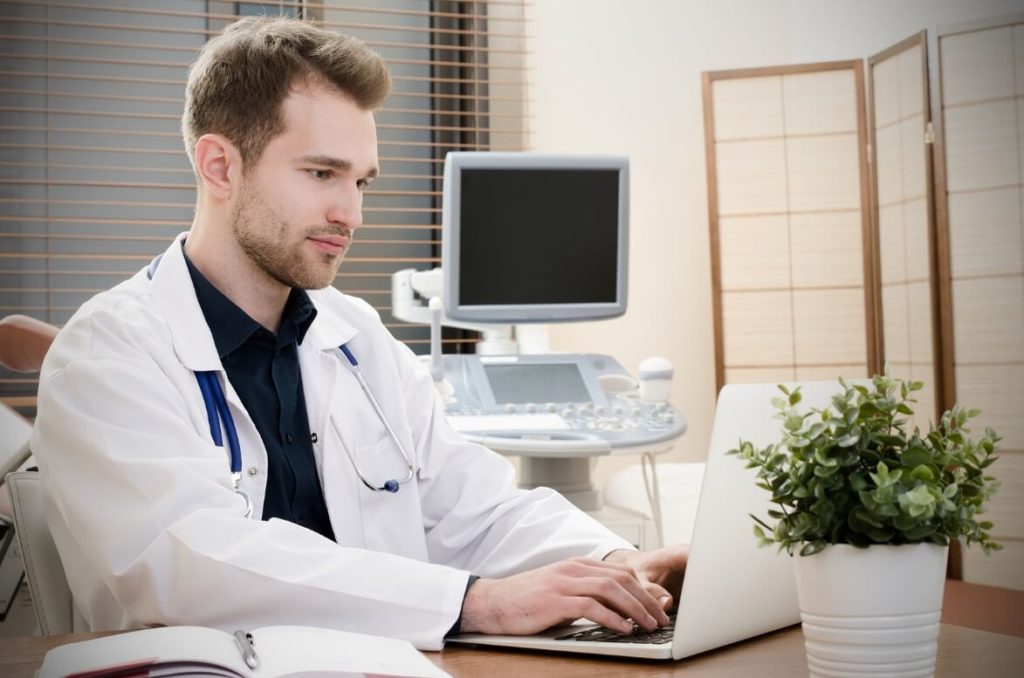
Old-fashioned fax machines have provided an essential means of communication between practitioners for decades, resulting in the technology becoming ingrained within the healthcare industry. While some call for an immediate end to faxing in the NHS, eFax believes there is an interim solution that will allow the NHS to ditch the physical fax while buying time to develop fully integrated communication systems.

Article overview:

The Problem with Faxing in Healthcare

As part of a move towards modernisation and better healthcare provision, Healthcare Secretary Matt Hancock is seeking to eradicate fax technology from the industry. While this move has its benefits, it also presents problems:
  • Fax technology has numerous benefits to documentation sharing in healthcare
  • Faxing as a practice is used universally, allowing for comprehensive file access. Therefore, removal creates barriers
  • There is currently no infrastructure available to replace faxing across the entire healthcare service.
The healthcare industry is not ready to remove faxing as a practice, but Hancock insists it must go. What is the solution?

Cloud Faxing Supports a Shift in the Healthcare System

eFax cloud faxing enables healthcare organisations to eliminate the physical fax without risking the disruption of an entirely new system. The integration of digital fax will afford the health service the time it needs to develop the most viable alternative to fax machines.

Learn More! Read the Full Story Below

The Healthcare Industry and Faxing in 2019: What Is the Current Situation?

The modern healthcare industry is rapidly developing with new patient care services. However, while the industry as a whole evolves, one aspect that has seen little change is the sector’s use of fax. Currently, the NHS operates around 8,000 fax machines, with a recent report outlining that 40% of trusts use more than 100 units. The result of this is that the NHS is not the only place within healthcare where the use of faxing is widespread. Those who work with the service also require fax technology to maintain effective communication platforms — fax machines are common in all associated private sectors and organisations, including physiotherapy, mental health clinics, care homes, pharmaceutical providers and more.

Fax remains so ingrained as a method of communication because it has numerous advantages over other systems. Primarily within healthcare, this concerns the immediate transmission of important patient documentation, such as prescriptions, waivers and treatment files. Valid signatures are regularly required for these documents and faxing offers the most reliable way of legally submitting files within and across healthcare organisations.

For healthcare, fax is currently integral to the continued operation. Without the ability to transmit fax files, certain activities could not be carried out.

health-care-doctor-working-with-computer

Why the Healthcare Secretary Matt Hancock Wants to Get Rid of Faxing

Healthcare Secretary Matt Hancock has been leading the move against the fax, calling current systems “downright dangerous” and even going as far as to ban the purchase of traditional fax machines, with plans to go “fax-free” by 2020. As part of a recent speech, Hancock discussed how he’s worked “to get out-of-date technology” removed from the NHS, stating tech that “is no longer fit for purpose, like fax machines” needs to be replaced by newer systems. In the wake of this movement, many trusts are looking to support the “axe the fax” campaigns that have been gathering attention among the sector. But why remove faxing if it has benefits for NHS communication?
Matt Hancock’s move towards the removal of fax machines is not without good reason. His concerns lie over a number of disadvantages that come attached to the use of the technology. Specifically, he refers to a lack of efficiency, as well as poor security, compared to other platforms. He believes newer technology can support a more secure healthcare system and increase operational capacity. The team at eFax agree that his arguments are not without merit. Old-fashioned fax machines are known to have security risks. A commonly cited example is an incident when a healthcare practice accidentally sent a patient’s files to the wrong fax number, creating a major confidentiality breach. Such breaches are not uncommon and highlight the vulnerabilities of the physical fax process. Other problems with the technology include high costs of usage, poor security features, reliability issues and inefficient workflow. Sending a fax through a fax machine can be a laborious process that absorbs valuable healthcare professionals’ time and resources.

The Problem with Removing Fax from Healthcare

While Matt Hancock’s plans to remove faxing from the NHS are entirely justified, he still faces a problem. Currently, there is no replacement infrastructure available that can viably satisfy the reliance the healthcare system has on fax technology. This means a new system to replace faxing within the NHS needs to be devised — one that can be used by all its connected organisations and sectors. To achieve something like this by 2020, the system would need to be introduced rapidly and likely see major disruptions that would negatively impact healthcare and its ability to treat patients. A replacement of fax as a communication method would require a total overhaul of healthcare document transmission processes — a significant undertaking.

Hancock is right. The technological weaknesses and vulnerabilities of the physical fax machine need to be removed, but the fax as a communication method cannot simply be made redundant as a result. Faxing is just too valuable to the healthcare industry at the moment — and far too entrenched to be removed so quickly.

So where does this leave us? eFax has a solution.

Finding a Solution to the Current Crisis

Matt Hancock’s desire for changes to the NHS is utterly necessary and achievable. However, at eFax, we understand this process must be approached carefully.

Implementation of a new system without proper planning could lead to massive costs and potential rollout issues. Last year, the NHS had to settle a bill of £7 million just to reverse the problems caused by the failed introduction of a new IT system — and this was on a small scale for a single trust. If the rollout of a system designed to replace the heavily entrenched communication method of fax was to experience problems, the consequences could be disastrous. eFax believe what the healthcare system needs is an interim solution, one that can meet the demands laid out by the Healthcare Secretary while allowing for long-term infrastructure to be developed at a suitable rate with ample time allotted for testing and effective integration.

eFax cloud faxing services could be that solution.

An entirely digital format, eFax services allow for upgraded fax technology within the healthcare sector. By integrating cloud faxing into operations, the healthcare system can:

  • Secure safer methods of transmission, better reliability and cheaper cost of use
  • Continue to use of fax documentation across the healthcare sector
  • Send and receive fax documents both to and from other digital fax services and fax machines
  • Move to digital platforms without the need for new hardware, software or training

eFax cloud faxing can do all this because it works by essentially turning smart devices and computers into fax machines using remotely accessed servers, thus removing the need for old-fashioned fax machines. It offers the comprehensive fax functionality currently in use across the NHS and associated industries and bodies, while also providing a digital alternative that falls in-line with Matt Hancock’s vision for a modernised service.

But how does the introduction of eFax now translate to supporting the development of healthcare technology?

How Cloud Faxing Supports The Development of Healthcare Technology

Integration of digital faxing will only change the method of documentation input — it won’t change the processes behind it or which files can be shared. The result is, eFax can be introduced with minimal adaptation, reducing the risk of disruption.

With these immediate and straightforward solutions available, the healthcare sector can look to the future and start to develop a unique system that covers the entire industry network. eFax provides an interim solution that enables healthcare to move into the 21st century and ditch the fax machine and its disadvantages while giving the system time to roll out a new replacement communication infrastructure for faxing. The healthcare system is not yet ready to get rid of faxing, but that is not to say it won’t in the future. The use of eFax cloud faxing presents the opportunity for development now, supporting the building blocks of a better and more secure healthcare service long term.

eFax in Practice: Leeds Teaching Hospital Demonstrates Potential for Success

Our confidence in eFax’s ability to support the healthcare system during this crucial transitionary period is backed by the recent successful integration of our services within a series of Leeds-based teaching hospitals. The Leeds Teaching Hospitals NHS Trust (LTHT) began implementation of eFax in early 2019 after Hancock’s decision to ban the purchase of fax machines. The goal was to develop a system where fax documents could still be transmitted, but the fax machine itself could be eliminated. The majority of their 350 fax machines were removed from teaching hospitals across the trust, with their faxing platform replaced instead by eFax digital services. Helen Hochstrasser, Project Manager at LTHT, is quoted as saying that “the reception has been positive.” Hochstrasser’s message is echoed by Chris Archer, Computer Services Manager at LTHT, who stated: “eFax is highly cost-effective and provides a far more secure way of communicating with key stakeholders in a patients’ care. It will support the removal of traditional fax machines and ensure parties, such as GPs and pharmacies, struggling to relinquish their fax still have a simple method of communicating with the trust.” Introduction of eFax services to the Leeds Teaching Hospitals NHS Trust highlights how effective eFax can be as an interim solution for all those operating within the healthcare industry while a long-term answer is developed. The success demonstrates the simplicity of incorporating eFax and how fax as a communication method can be effectively maintained without the need for old-fashioned fax machine technology.

Your healthcare organisation can meet the “fax-free” by 2020 demands right now. Sign up to eFax and experience our free trial with no contract and no commitment. Continue to send important fax documents to anyone in healthcare, without the need for outdated fax machines.

BT 2025 Switch Off: How Will It Impact You and Your Business?

In 2025, BT will conduct major changes to its services, permanently switching off important communications networks. Discover precisely what is going on, why it is happening and what you can do to stop it causing problems for your business.

Article overview:

What Is Happening With the BT 2025 Switch Off?

National telecoms provider BT has announced they will shut off their ISDN and PSTN services.

The move brings to an end the use of analogue phone lines and moves communications technology into an entirely online space.

BT will no longer offer businesses the ability to acquire ISDN and PSTN after 2020, with the total switch off occurring in 2025.

How Does It Impact Business Communication?

The move comes as part of cost-saving efforts by BT.

Over 2 million UK businesses will be affected by the switch off. Primarily, these will be small companies. The biggest impact will be felt by those with heavy use of fax machines or landline telephones.

Businesses will need to look for alternative methods of data transmission to maintain communication coverage.

Where Do You Go from Here?

BT is pushing customers towards its VoIP solutions, enabling them to keep their old technology that currently operates over ISDN and PSTN.

eFax suggests that instead of just updating transmission methods to VoIP, businesses should consider improving their entire system by ditching legacy fax machine technology and moving to cloud faxing solutions.

By removing fax machines, rather than maintaining their old systems on new data transmission networks, businesses can take advantage of upgraded technology for enhanced growth and development.

No obligation. No set-up fees. No risk.

What Is ISDN?

ISDN, or Integrated Service Digital Network, is the first iteration of high-speed internet. It was the evolution of dial-up, yet had similarities to its predecessor in that it utilised hard-wire phone line connections to enable communication. ISDN first appeared in the 90s and revolutionised internet connectivity. Many credit the technology as being the ground-work for modern, faster internet solutions. The service enables businesses to send data, such as voice calls or images, through their phone lines using the internet.

What Is PSTN?

The Public Switch Phone Network, abbreviated to PSTN, is what you might refer to as the classic analogue telephone system — the system that enables landline connectivity.

This centuries-old technology was introduced during the 1800s and allows for information to be transmitted through a network of copper wires. Businesses have been using PSTN as their primary method of transmitting phone calls and fax documentation for many years. For millions of operations, PSTN is the foundation of communication.

What Is the BT 2025 Switch Off?

The BT 2025 switch off was announced last year. The national provider of telecommunications stated that they would no longer be providing the service to businesses in the UK. BT plans to switch off all functionality for analogue phone lines, which means they will cease to operate. Following the announcement, BT also stated they would no longer sell ISDN or PSTN services after 2020 in preparation for the move. After the switch off, there will be no maintenance or recovery of phone lines, and any data sent will no longer be carried through ISDN and PSTNs. You could opt to switch to another supplier to maintain your current system, but with BT being the largest provider, we will likely see others follow their example soon.

Why Is This Happening?

For businesses currently using ISDN and PSTN systems, the idea of the BT 2025 switch off might be a bit frustrating. Given that the company is offering you opportunities to maintain your systems, they are effectively forcing you into a change.

But why?

The current copper wire system has seen adaptations and improvements since its inception in the 1800s, however, it is still effectively a service that relies on technology devised centuries ago. The result for BT is the costs of maintaining the system are incredibly high and rising. This also means prices go up for the end-user. ISDN and PSTN services are simply not optimised for modern business. There are plenty of other methods of data transmission available that are cheaper, faster and more reliable.

It is the combination of factors at play here that has led to the BT 2025 switch off. The company wants to move businesses over to its more cost-effective products.

Who Will Be Affected?

The BT 2025 switch-off will impact all businesses currently operating ISDN or PSTN.

The switch-off will affect a large volume of small businesses, as these organisations are less reliant on more advanced and diverse communication platforms than larger companies, meaning they haven’t needed to upgrade their systems.

42% of SMEs still use analogue lines to transmit data. That’s around 2.4 million businesses. And, while many bigger companies and national brands have already updated their data transmission systems, not all have made the switch. Roughly 33% of larger firms still operate on ISDN or PSTN. Essentially, there are still a lot of British companies reliant on fixed landlines for communication.

If you send data through landline systems, then the BT 2025 switch off will likely have consequences for your business.

How Will Your Business Be Affected?

How much of an impact the BT 2025 switch off will have on your business all depends on how wide-spread your use of ISDN or PSTN technology is, and what kind of hardware you are using. When it comes to switching internet services, there isn’t much of a challenge. If you are using ISDN, upgrading to options like fibre-optic connections is simply a matter of changing your service provider package.

The bigger impacts come when considering other methods of communication, primarily voice calling and faxing. Unless you plan on ditching fax machines and landlines altogether, these platforms need particular means of support to send and receive information. You can’t just plug your fax machine into your computer and send a fax through the internet.

What Are the Alternatives after the BT 2025 Switch Off?

When it comes to adapting business technology following the BT 2025, the big push is towards VoIP.

VoIP — or Voice Over Internet Protocol — is a method of data transmission that allows for voice messages and images to be sent over the internet using your current hardware. But how? Didn’t we just say you can’t plug your fax machine into your computer and expect it to work?

Traditionally, information from fax machines and telephones travelled down a hardline to your copper-wire landline. Data then transmitted — via ISDN or PSTN — through this wire. With the wire no longer operational following the BT 2025 switch off, the data must go elsewhere. How VoIP works for your phones and fax machines is simple. Using an adaptor device, you can turn your landline-reliant fax machines and phones into hardware with internet connectivity.

Instead of plugging into your fixed landline, the hardline cable of your fax machines and telephones runs through the adaptor. The adaptor converts the data into a format readable by VoIP. Your VoIP data then transmits through your internet connection, whichever platform that is. Because VoIP is a technology compatible with other hardline machines, your recipient’s devices are still able to decipher and disseminate the data, even if they still use older systems.

In essence, VoIP means you can use your current hardline devices to send information to other hardline devices, but through the internet. The result is minimal change to your systems while maintaining communication coverage, even after the BT 2025 switch off.

A Better Solution for Fax Communication

If you are a business at risk of upset due to the BT 2025 switch off, then VoIP may be a tempting option. With only a few simple tweaks, you can carry on using all the same hardware you use today. So why not make the switch to VoIP? The problem is while VoIP provides a solution to the loss of the archaic method of data transmission that is ISDN and PSTN, it does not offer a solution to the out-dated technology you are using to send said data.

Like the copper-wire landline, the fax machine is hundreds of years old. It is legacy technology that comes complete with a series of disadvantages not fit for purpose in the modern era. From major security flaws to excessive costs, the fax machine is just as out-dated as the landline it needs to operate on, and its removal is just as necessary.

However, you can’t just get rid of faxing. Many businesses still need to use it.

Billions of fax documents are still transmitted globally each year. Despite being technology first conceived during the Victorian Era, the fax still has immense value to commercial communication. Businesses rely on fax for everything from international document sharing to submission of legally binding contracts. Fax is a deeply entrenched and essential practice.

This does not mean you must maintain old-fashioned technology.

eFax provides businesses with an alternative solution. Our digital fax services bring fax transmission into the 21st-century. With our solutions, you can send and receive fax online using your computer, tablet or smartphone. eFax is compatible with legacy hardware, too, which means even if you upgrade and your customers, partners or clients don’t, you can still maintain complete communication coverage. What’s more, digital faxing provides businesses with a range of advantages fax machines simply cannot offer, including enhanced data security, increased document accessibility, flexible usage, lower running costs and powerful improvements to reliability.

With the BT 2025 switch off looming, businesses will be considering making changes to their data transmission systems to avoid potential disruption. While VoIP may appear to be the easiest solution, it does not offer you the best opportunities. During this period of transition from legacy systems to newer services, why not take advantage of the ultimate in fax sending solutions, instead of continuing to rely on hardware just as dated as the technology removed in the first place?

eFax cloud faxing is the next step in fax solutions. Upgrade your business to a service optimised for 21st-century business operation. Try our online faxing free trial offer, and find out for yourself how it can transform your company!

Paper and the GDPR: How to Improve Compliance in Healthcare

Are your paper-based practices putting you more at risk of a GDPR infraction? Discover exactly what risks are facing healthcare in terms of non-compliance, and what you can do to reduce them.

Article overview:

Risk of Paper to GDPR

Compliance with GDPR is essential for all organisations operating in the healthcare sector, but vulnerabilities in documentation management could be putting you at risk. The use of paper files and records present the healthcare sector with numerous hazards that have the potential to be avoided. These include:
  • Unauthorised access.
  • Loss, damage and theft.
  • A lack of security.
One of the primary risk factors associated with paper usage is the continued reliance on fax machine technology. The outdated technology presents its own risks as well:
  • Easy-to-access paper files left on fax machines.
  • Records being submitted to unauthorised parties from misdialing using keypads.
  • Fax machines creating weaknesses in IT systems.
Use of paper should be reduced in order to improve compliance with the GDPR. But how can your healthcare organisation achieve this goal?

How to Reduce Your Pa-per Risk with Cloud Fax-ing

The introduction of online faxing technology can reduce the need for paper while improving compliance with the GDPR. Compliance is boosted by cloud faxing because:
  • Your data can be encrypted.
  • Your records are stored in password protected locations.
  • Access is controlled and managed digitally.
  • The chance of sharing data with unintended parties is reduced.
  • Data can be easily destroyed with less risk.
  • Data can be optionally stored, archived for accessibility whenever necessary.
Establishing cloud faxing with eFax is easy. Gaining immediate access to digital services, pav-ing way for eliminating paper from your faxing process, can improve GDPR compliance, and your organisation can continue to communicate by fax.

Learn More! Read the Full Story Below

What Is ISDN?

GDPR — General Data Protection Regulations —launched in May 2018 as part of the European Union’s clamp down on how da-ta is used and handled by businesses, organisations and non-profits, and any other publicly operating entities. The aim of introducing GDPR was to ensure:
  • Individuals have greater control over their personal data.
  • Data security measures are increased.
  • The processing and usage of personal data are made clear.

What Does GDPR Compliance Actually Mean for Your Healthcare Organisation?

No one is immune to the impact of GDPR. If you manage personal data on behalf of individuals based in the European Union, you will be affected in some way. As the healthcare industry is so often reliant on the use of personal information to offer care and treatment for patients, organisations operating within the sector are impacted by the GDPR.

The result is that compliance with the GDPR is utterly essential for most healthcare organisations. It does not matter if you are a NHS trust operating a huge roster of patients or a private practice — if you have individuals under your care, you will have personal data therefore you must comply with the regulations.

Failure to meet compliance with the GDPR will mean that, if a breach occurs, you could face serious consequences and poten-tially heavy fines. Given that the private healthcare sector is the most vulnerable industry in terms of data breaches, it’s vital that your practice is compliant with the GDPR.

Paper and the GDPR: How Are They Connected?

From sending paper letters to using fax machines, it is common to find physical paper documentation being used, stored and shared in the sector. This can create problems for compliance with the GDPR. While you may have increased the security of your digital assets following the introduction of the GDPR, paper documents are still beholden to the new laws. Paper documents that con-tain personal information — be they patient records, prescription information, waivers or contact forms — must be protected.

As part of the GDPR, you are required to offer “data protection by design and by default.” All personal data you manage must be used only for activities that the owner of the personal data has consented to. You are responsible for making sure this happens. Any use outside of their consent is not compliant with the GDPR and could result in legal repercussions.

It is critical that you pay attention not only to how your digital documents are secured, but your paper ones as well.

The Risks of Paper in Healthcare

There are a series of risks associated with the use of paper in compliance with the GDPR — risks that, if not addressed, could result in breaches. These include:
  • Lack of Encryption — Digital files can be protected by encryption, which can aid prevention of data from being manipulated during transit. Paper documents are not protected in the same way, which means theft or loss could result due to easy access.
  • Unsecured Storage — The GDPR requires personal information to be properly secured. Filing cabinets, desk draws, shelving units and other easy-to-reach places are not secure; even locked units can be easily compromised. These are common locations to store physical paper files within your healthcare organisation, however they are less secure than digitally stored files.
  • Unauthorised Access — Only those authorised to view personal information are permitted to do so. Pa-per files clearly have no method of blocking viewership and must be placed somewhere safe. If access is not tightly regulated, which can be difficult to ensure in busy workplaces, unauthorised access is a possibility, which makes paper files more at risk of security breaches.
  • Outdated Records — The GDPR requires personal data to be kept up to date. Updating paper docu-ments can be difficult and time-consuming, which means it will likely become a process that is delayed or ignored.
  • Disposal of Paper — If paper is not disposed of properly, information can be exposed. Complacent practices can result in personal information being revealed to those it shouldn’t, simply because a file was placed in a bin without proper destruction processes carried out.

Fax Machines and Increased Paper Risk

There are numerous uses of paper within the healthcare sector, and one major factor involved in this is the continued use of fax machine technology. Physical fax machines require paper, which results in many risks as highlighted above. However, the fax ma-chine presents its own risks:
  • Misdialing, or the fat finger problem, is common among fax machine users. It is actually the second biggest cause of per-sonal data breaches that result from human error. It is all too easy to accidentally send sensitive patient data to the wrong place, resulting in major and obvious breaches of the GDPR.
  • When you receive a fax using a fax machine, it is held on the unit or immediately printed. Either way, it is accessible to any-one who is in close proximity to the fax machine. Unless the fax machine is locked inside your office, where only you have ac-cess, the documents you are receiving and sending are not secure. This is due to the potential of your documents being viewed by an unauthorised party — be it other members of staff, patients or clients.
  • The recent discovery of a vulnerability known as the “faxploit” has identified weaknesses in fax machine security. Having a fax machine connected to your IT systems means hackers can enter your network via the machine’s unprotected analog chan-nels and wreak havoc elsewhere. This can result in data theft and access — a huge problem for compliance with the GDPR.

How to Improve use of Paper for Compliance with the GDPR

In order to improve compliance with the GDPR when it comes to paper usage, one of the simplest and most effective answers is to reduce the volume of paper being consumed by your healthcare organisation. This can be a difficult process to manage.

The NHS has laid out plans to make the health and social care industry paperless by 2020. However, this requires numerous or-ganisations to work together. Predictions are that the paperless 2020 goal is not achievable, at least not completely, and these argu-ments are not entirely without merit. The NHS currently operates over 9,000 fax machines, and many more exist in other organisa-tions in the healthcare industry. Removal of all these units by 2020 seems like a tall order, which means paper documents will contin-ue to play a significant part in the healthcare sector and the GDPR risks will continue to exist.

But, just because the risk exists for others, that doesn’t mean it must exist for you and your healthcare organisation. You can act now to minimise the risks to GDPR breaches. How can you do this? By incorporating cloud-faxing technology into your workplace.

The Cloud-Faxing Solution

Clearly you can’t get rid of faxing — it’s too important to eliminate as a form of communication. However, fax machines are pre-senting your organisation with potential GDPR breaches. Thankfully, there is a way to continue sending faxes without relying on paper documentation. Online faxing services — known as cloud faxing — help provide better security measures to aid compliance with GDPR, while enabling your business to freely send and receive fax documents. How does it work? Online cloud faxing is an entirely digital system, with fax sent exclusively over the internet. The platform also allows you to send to, and receive documents from, traditional fax machines. eFax Corporate’s digital faxing solutions are capable of adapting file for-mats to be communicated with both online cloud-faxing powered devices and fax machine units. This means your healthcare organi-sation can maintain all faxing capabilities. However, it no longer has the need to use paper in this process, as all files are handled digi-tally via our mobile application or secure online portal. Cloud faxing offers:
  • Encryption — Files stored on eFax Corporate services, using the secure feature, are encrypted to an advanced standard TLS. This ensures that your fax documents are protected in transit from their point of origin on your organi-sation’s network to your recipient’s fax.
  • Pre-Approved Contacts — With cloud faxing there is no number input using a keypad. Fax documents are submitted to pre-set contacts instead, which reduces the chances of sending files to unintended recipients.
  • Limited Access — Paper documents no longer sit on a fax machine and paper is not left in unsecured locations. Files are held behind access controls and logins. This lowers the risk of unauthorised access.
  • Easy Access to Documents — If desired, your healthcare organisation can store and archive files using our document management system. This allows you to easily access, destroy or update information whenever necessary. It also makes it much more difficult for documents to be misplaced or lost.

eFax Corporate digital faxing solutions are the answer you’ve been searching for, enabling you to eliminate paper from your faxing process, improving compliance with GDPR. Protect your documents today by signing up to our online faxing services. Discover all the benefits that eFax can bring to your organisation.

How Online Fax Services Can Help the Healthcare Industry

Is your healthcare organisation still using old-fashioned fax machines to transmit documentation? eFax discusses exactly why the future of faxing is in the digital world, and how you can start experiencing the benefits of online cloud faxing today.

Article overview:

The Problem with Fax Machines

Many organisations operating in healthcare continue to use fax machines to transmit documents. The technology, however, is outdated and needs replacing. The problems that you may experience if you carry on using fax machines include:
  • Issues with data security and compliance
  • Ineffective, inefficient and costly working practices
  • Difficulty with communication as other healthcare organisations develop digital solutions.
Removal of fax machines and the adoption of new communication technology in its place has numerous benefits, but faxing is so widespread within the healthcare sector that you cannot be without it. What is the solution?

The eFax Solution

eFax online cloud faxing offers your healthcare organisation the opportunity to maintain fax functionality while ditching the fax machine for a more technologically advanced option. Integration of our services into your healthcare practice or business affords many major advantages, such as:
  • Improved document security and compliance with NHS Digital and the CQC
  • The streamlining of your workplace and reduction in resource expenditure
  • Future proofing your healthcare organisation against upcoming changes within the sector.
Making the change from physical fax machines to eFax online solutions is quick, simple and cost-effective.

Learn More! Read the Full Story Below

Faxing and the Healthcare Industry

Working within the healthcare industry you will be aware of the constraints set upon it by a continued reliance on the need to transmit fax documentation. 9,000 fax machine units are still used within the NHS alone — with many more required by third-party organisations that work with the service. It is an inescapable truth that if you want to work with the NHS, as most healthcare organisations in the UK do at some point, you’ll need to integrate a faxing system into your business or practice.

Faxing is a deep-rooted part of the NHS’s infrastructure, and, therefore, the health and social care sector as a whole. However, continuing to commit to using an old-fashioned fax machine for faxing does present a myriad of problems.

The Problem with Fax Machines

The use of a fax machine presents your healthcare organisation with a myriad of potential problems and difficulties. So many, in fact, that the Healthcare Secretary Matt Hancock warned against the use of the “downright dangerous” technology.

Physical fax machines are known to be unsecure — allowing for vulnerabilities to cyber attacks and reducing the effectiveness of data security measures in healthcare by presenting issues such as a lack of encryption and the potential for unauthorised access to documentation. They are also woefully ineffective in terms of absorbing time and resources, and they don’t allow for flexibility, including remote working or mass transmission of documentation.

This list of issues with the use of fax machines goes on and on.

The fact that faxing as a practice is deeply entrenched within the healthcare industry aside, it is both useful and essential. So if you can’t ditch faxing, yet the fax machine is causing your healthcare organisation to experience an array of disadvantages, what options do you have?

What Is Online Cloud Faxing?

Online cloud-faxing solutions offered by services like eFax take the process of faxing and adapt them to the modern day. Your files are all transmitted through digital platforms — both via mobile applications and online portals — instead of being sent and received as paper documents.

Online cloud faxing allows for sending files to, and receiving files from, a physical fax machine (even if you don’t own one yourself) transmitting e-signatures and signed documents, and experiencing higher levels of online security.

How eFax Can Aid Data Security Measures in Healthcare and Support the Future of Your Organisation

Adopting online cloud-faxing processes and removing physical fax machines from your healthcare organisation can afford you a number of benefits. The technology exists purely to improve outdated practices and offer solutions to problems and inadequacies posed by the commonly used hardware.

What changes can you expect to see, and what benefits can you expect to experience, when switching from fax machines to eFax online cloud faxing?

Fast and Immediate Streamlining of the Workplace

Fax machines are resource pits. In order to operate them, they require a surprisingly vast investment of money. Consider first the amount of paper, ink and toner consumed by your machine, and the costs of repairs and maintenance it requires. Then, the financial implications of the time spent by staff using a fax machine must also be taken into account.

The average employee spends about 15 seconds just walking over to a fax machine to send a document. A few documents a day and that’s minutes lost. Over years, that’s hours of time. Add on top of that the sheer quantity of time needed to manually input every single page of a file that must be sent — which can be very large, especially when concerning patients — and the transmission period of the actual document (one minute per page) and you have an entirely inefficient and completely non-cost-effective process. Workers may also have to queue up and wait to use the unit, only increasing time wasted, and this doesn’t even account for time lost due to signal problems and outages.

Online cloud faxing completely transforms this routine of resource waste. Available on smart devices and computers, there is no need to spend time moving between workplace and fax machine, no time lost waiting and, as long as WiFi is available, an extremely low risk of outages. There is also no expense required on paper, ink or maintenance, as all files are stored in a digital space, whether they are sent or received. Last, and perhaps most important of all, large files can be quickly transferred as single documents, attached and submitted in moments.

With all these benefits combined, your healthcare organisation will see immediate boosts to workplace efficiency and the long-term driving down of costs associated with faxing. If the use of a fax machine is a major part of your communication processes, this could make a massive difference.

Improve Data Security

The importance of data security measures in healthcare cannot be understated. Maintaining secure records and keeping information confidential is essential. Not only is it a core part of remaining compliant with new GDPR laws, but failure in this area can result in major black marks against your business or practice. Fax machines, however, can make data security a challenge, and the use of the technology results in certain vulnerabilities:
  • Human error in terms of fax transmission is common. One of the top causes of data breaches in the UK is accidental submission of documentation to the wrong recipient through the misdialing of fax numbers. The result is exposure of potentially sensitive data to inappropriate parties.
  • When a fax is transmitted to a fax machine, it becomes accessible to any individual who can also access the machine. This could be any member of your staff, or even patients or clients in the vicinity of the machine at the time. Again, this risks exposure of confidential data, as the documents are not secured from unauthorised viewing.
  • Fax machines do not feature comprehensive data encryption when transmitting files, which means parts of the process are vulnerable to hacking and cybercrime. Files can be stolen or damaged during these vulnerable stages.
  • Documentation transfers resulting from fax machine use means the storage and management of paper documents, which themselves are more vulnerable to data protection problems due to the way they are stored and accessed.
Online cloud faxing addresses these issues and improves security by actively working to reduce their impact:
  • Sending documents to the wrong recipient and risking exposure to unauthorised parties becomes a lot more difficult, as you no longer dial numbers, instead transmitting files through pre-approved contacts.
  • Fax documents are received and stored on eFax cloud-based servers, and held behind logins and access controls. Files don’t sit in paper trays waiting to be taken, which means only those given access to the documents can view them.
  • Data transmitted through online cloud faxing is encrypted throughout the entire process, removing weaknesses in the chain and lowering the chance of documents being accessed by cybercriminals.
  • As all documents are received in a digital format — whether they are sent to you from a physical fax machine or not — there is no paper to store, eliminating the risk factors associated with physical files.

Aid NHS Digital and CQC Compliance

Those who want to work within the NHS, or already do, must ensure compliance with both NHS Digital and the CQC (Care Quality Commission). Both organisations manage and maintain a number of different elements of patient safety and security for the NHS. If you fail to meet their required standards, you are unable to create a working relationship with the National Healthcare Service.

Fax machines present problems when it comes to compliance with both governing bodies. Among other things, NHS Digital is concerned with patient security measures in healthcare. If your practices do not meet the standards set out in these regulations, you won’t achieve high enough levels of compliance. Fax machines, as noted above, place a series of risk factors on data protection and patient confidentiality, leading to potential breaches of NHS Digital compliance.

In terms of meeting guidelines set out by the CQC, its objective is clear: the CQC inspects and monitors all manner of operations carried out by healthcare organisations working with or within the NHS, and that includes the management of patient files and data. The CQC audits your records and makes sure they are meeting standards of information governance set out by organisations such as NHS Digital. Physical fax machines create paper documents, which can be difficult to locate and store, and are often misplaced or lost. This makes provision of information to CQC a challenge, which can risk compliance and working relationships with the NHS.

eFax online cloud faxing aids compliance with both NHS Digital and the CQC in two ways:
  • It improves security around documentation, helping your organisation better meet safety standards required by NHS Digital
  • It allows you to place all documentation within a digital centralised management system, stored on our cloud-based servers, for easy access. This ensures files are easily accessible for the CQC when it comes to audits.

Future Proof Your Healthcare Organisation

There are three major changes heading towards your healthcare organisation in the future — three changes that are directly impacted by your use of a fax machine. The first is the NHS Paperless 2020 directive. Established by NHS Digital as part of its push towards a more interconnected and modern healthcare system, the campaign will see NHS practices going completely paperless, with documentation all managed over digital formats. Stages of the initiative are already being rolled out, with trusts no longer accepting paper patient referrals — only digital ones. Continued use of a fax machine puts your healthcare organisation at odds with the Paperless 2020 goal and could leave you unable to communicate with other organisations that have already moved towards the target. The second upcoming change is the 2025 analogue switch off commissioned by British Telecoms. The nationwide telecommunications provider is set to remove all analogue services by the year 2025, which means fax machines will no longer work using standard telephone lines as they do now. Options are available to switch to VoIP transmissions following the change, but these protocols present a number of their own issues for faxing. Finally, and most significantly for fax machine users, the NHS is set to ban the purchase of fax machines across its trusts and practices as of January 2019, with the government targeting a complete removal of the technology by March 2020. By making the switch to eFax online cloud faxing, you avoid any complications associated with either of the upcoming changes. eFax helps you move to a paperless working environment, while our online services mean you no longer need to rely on analogue transmissions to submit fax documents.

A Quick Guide to Upgrading Your Fax Systems to eFax Online Cloud Faxing

Switching from physical fax machines to eFax’s online cloud-faxing solutions could not be easier. Access to our services is immediate and you don’t need any new hardware, software or training to get started. We’ll also port over all your old fax numbers, meaning you won’t have to update your phone systems or even tell your clients or patients that you’ve made the switch. All messages sent to your old systems will automatically be submitted to your eFax account.

Sound too good to be true? Well, it isn’t!

The process of upgrading to your new and more advanced form of faxing is simple. These are the only steps you need to follow:

  1. Sign up to eFax and begin your free trial
  2. Register your new fax number with us
  3. Download our bespoke applications to your smart devices and computer systems
  4. Login using your new eFax details
  5. Throw out your fax machine and start online cloud faxing instantly!

It really is that easy. No fuss. No difficult switchover processes. eFax is designed to get you online and faxing quickly without any trouble. Give your healthcare organisation the solutions it needs to move into the future and improve data security measures in healthcare today.

Try eFax without commitment or contract for absolutely free. Get instant access to our complete range of services and discover exactly how our online cloud-faxing solutions can transform the way you share and transmit healthcare documents and files.


Protecting Patient Data: Faxing Has Moved On

Discover the future of faxing, and how upgrading to eFax corporate cloud faxing could transform how you better protect your patient’s data and improve your information governance within the NHS and other aspects of the healthcare sector.

Article overview:

The Problem With Fax Machines and Patient Data

The healthcare sector regularly uses fax machines to transmit documents, but this old-fashioned technology is leading to situations where patient data is being put at risk.

Faxing is an essential practice. You need to be able to send faxes in order to effectively communicate with other organisations working in healthcare.

But the fax machines used to transmit documents are resulting in data protection problems.

Problems include:

  • Potential non-compliance with NHS Digital and GDPR
  • Unsecure document transfers
  • The distribution of files to unauthorised parties
  • Human error, loss of documentation and resource wastage

Fax machines need to be eradicated, yet faxing remains a highly useful practice. eFax corporate offers a solution that enables faxing to continue while helping to reduce some of the risks associated with fax machine usage.

The eFax Solution to Patient Data Risks

eFax corporate’s digital faxing solutions assist in improving your ability to meet required information governance standards while maintaining fax communication and document transmission.

Switching from fax machines to digital faxing means:

  • You can elect to secure data through high-level data encryption
  • You reduce resource wastage, from not having to wait by the fax machine, and get time back to take care of business tasks
  • You keep files more secure and can restrict access to authorised individuals only
  • You have online access to files and documents
  • You can reduce risks of loss and human error

Online faxing allows you to continue communicating with physical fax machines while taking advantage of all the benefits that come with it. You do not need:

  • New hardware or installation of equipment
  • To change contact details or fax numbers
  • To take downtime during the upgrade
  • To pay excessive costs for document sharing

Learn More! Read the Full Story Below

The protection of your patient data has become a critical component of day-to-day procedures. Patient data safety and confidentiality have always been of paramount importance. However, with the introduction of the GDPR and new initiatives being driven by NHS Digital, successful management of patient data is critical for complying with regulatory requirements. Failure to meet the regulatory requirements imposed by the NHS, the EU and other governing bodies could mean serious financial and legal repercussions, resulting in a myriad of complications for any organisation operating in the healthcare sector. While you may have taken steps to ensure you are compliant with the ever-changing roster of regulations, one area that is still suffering from a lack of attention is the use of the fax machine. The NHS operates around 9,000 fax machines, which means use of the old-fashioned technology is still rampant across the healthcare industry. However, using a fax machine presents many risks when it comes to protecting personal data and keeping confidential information safe and secure.

Why the Fax Machine Is Flawed

As an individual working within the healthcare sector, you will be aware of two things relating to fax machines:

  1. The system is overly reliant on the old technology
  2. They are time consuming and frustrating to use

However, these two problems are not the only reasons why the fax machine is a flawed part of the system, especially when it comes to the transmission of patient data. We all know that these archaic units need to go, but the urgency of this is not being addressed.

Proper information governance in the NHS, as well as other organisations operating within the healthcare sector, is critical. You need to ensure that your organization is adhering to the regulatory requirements relating to data usage, sharing and storage in order to protect yourself and your patient from breaches relating to information governance and loss of personal data.

However, fax machines do not offer effective methods of strong information governance. Why is this?

Fax machines were designed and built in the 19th century. They have come a long way since, but not far enough in the modern digital era. This technology was widespread in the 1980s and during this period it was effective in its role. However, technology has moved on.

This means your fax machines have to go.

Faxing, though, as a practice of communication, provides a number of crucial and indispensable benefits to the healthcare community. The fax needs to stay, but the fax machine needs to go. So what is the answer?

Utilising Cloud-Faxing Technology for Information Governance in the NHS & Healthcare

Meeting current standards of information governance within the NHS and the healthcare sector requires a modern solution. The fax machine just is not up to the challenge, but there are other methods of transmitting documents besides the physical fax machine.

eFax Corporate cloud-faxing solutions provide a better and more secure way of sending and receiving faxes, one that utilises digital technology to better manage compliance obligations under NHS Digital and the GDPR.

Protecting Patient Data: Cloud Faxing vs Fax Machines

So what are the flaws with fax machines, which are directly impacting information governance in the NHS and the healthcare sector, and what can cloud faxing do to help address some of these flaws? In the table below, eFax breaks down the major issues that can occur as a result of using fax machines, and how cloud faxing can assist in reducing some of these issues.

Upgrading to Cloud Faxing: Common Questions

Upgrading your systems to cloud faxing couldn’t be simpler when you do it through eFax corporate.

Working within the healthcare sector, you may have a number of concerns about switching your IT and communication systems. But rest assured: with eFax corporate, everything is taken care of for you quickly and easily. Questions we often get surrounding a move to cloud faxing include:

  • Can I still send and receive faxes from traditional fax machines?Yes! eFax corporate works both with other cloud-faxing services and fax machines. Our faxing solutions offer universal file transmission to anyone in the healthcare sector. Send faxes to fax machines, digital faxing platforms and even email addresses. You can also receive faxes sent via fax machines, as our software automatically converts the analogue file to a digital format.
  • How much downtime will we see when we adopt cloud faxing?None at all. eFax corporate cloud-faxing solutions provide immediate service access. There is no waiting around for numbers to switch or data transfers to be made. Once you’re with eFax corporate, you can start sending and receiving fax straight away. No loss of working hours; no unhappy patients or clients waiting for your systems to adjust.
  • Do we need new computers or IT systems?eFax corporate can be accessed on Android, iOS and Windows. If you use one or multiple of these operating systems, you can use eFax corporate! Our specially designed app ensures universal access for those operating in the healthcare profession, without the need to upgrade hardware or software. This is because all our services are managed through the cloud, operated from our own servers. All you need to do is install the software required to access them.
  • Will I need a new fax number?Worried you might need to update all your partners and contacts with your new faxing information? Don’t be! With eFax corporate, you keep your old fax number. We’ll manage the entire process of porting your contact information to your new eFax corporate account. You don’t need to do anything but sign up. We’ll take care of the rest. You needn’t be concerned about spending time letting others know about your switch to cloud faxing, nor do you need to be worried you might miss important document transfers because they are sent to your old fax machine. Nothing will change, except you finally get to ditch your old-fashioned fax machine and upgrade to 21st-century fax technology!

The Fax Machine: An Avoidable Risk to Patient Confidentiality in Health and Social Care

In the modern age of data security, patient confidentiality is essential. But many working in health and social care are facing certain risks as a result of using the fax machine.

Article overview:

How Fax Machines Impact Patient Confidentiality

The healthcare sector faces challenges when it comes to patient confidentiality. The widespread use of physical fax machines produces various risks to document security. Sending paper faxes using physical fax machines can lead to:
  • Unauthorised document access in instances where paper is left on top of the fax tray
  • Accidental sharing of confidential data if a fax number is misdialed on the keypad
  • The risk of theft or manipulation of data by third parties
  • A lack of security surrounding document storage and transmission
Faxing as a practice though, cannot be removed from the healthcare system. It is too valuable, important and entrenched in our day-to-day communications. But faxing isn’t the problem, the physical fax machine is. Removing the physical fax machine and switching to faxing in the digital cloud era helps to reduce the risks of breaching patient confidentiality. Digital cloud faxing is the upgrade from the physical fax machine which allows for the continuation of sharing vital documentation. But how can you achieve this?

Reducing Risk with Online Faxing

Digital faxing presents healthcare organisations with the opportunity to keep faxing, while helping to decrease the risks associated with using a physical fax machine.

eFax corporate online faxing solutions enables:

  • File sharing that is encrypted and transmitted securely
  • Access is given to intended parties only
  • Transmission is allowed to approved numbers only

Access to online faxing is immediate. Your practice can upgrade its data management at low cost, without the need to change hardware or update IT systems.

Online faxing ensures universal and comprehensive faxing solutions. Send faxes to, and receive faxes from, anyone in the industry, whether they use digital faxing platforms or physical fax machines.

Learn More! Read the Full Story Below

The healthcare sector is facing a crisis of confidentiality.

This year, it was reported that 150,000 patients had their data used without consent for research purposes. Additionally, it was only last year that it was revealed that 700,000 patient documents went missing. Given the tightening pressure from the NHS Digital and the introduction of the GDPR, minimising the chances of data breaches and the impact they can have on patients is more important than ever. To that end, you need to be thinking about ways to reduce the risk factors. With the NHS revealing there is a lack of funding and support, which, by extension, also impacts others operating in the healthcare sector. That said, there are options available to help decrease some of those risks, such as online faxing with eFax corporate.

The Role of Fax within Health and Social Care

The fax is an integral part of communication within the health and social care sector. Within the NHS itself, around 9,000 fax machines are regularly used, and that is only within the NHS. When looking outwards to associated organisations and businesses — operating in dentistry, pharmaceuticals, mental health, etc. — you’ll find the number of machines within the industry is much higher. The use of physical fax machines in the health and social care sector has not gone unnoticed, with many professionals in the industry calling for trusts and practices to “axe the fax”. Is this really necessary?

Why We Shouldn’t Eradicate The Fax

You work in healthcare, so you know the benefits of faxing within the sector. We need it within the healthcare sector, not least because it facilitates the sending and receiving of important files, such as records, orders and prescriptions, it enables the transmission of legally binding documents and signatures. Yet, while faxing as a concept is important for current processes, and indeed has its future in the healthcare sector, the physical fax machine does present major issues in terms of security and confidentiality in health and social care.

The Risks of Fax Machines for Patient Confidentiality in Health and Social Care

Fax machines as a technology are over 100 years old, designed and conceived in the late 19th century. They’ve moved on a bit since then, but not enough to catch up with the modern era and the threats posed to patient data in the 21st century.

Therefore, while fax as a method of sending documents remains a viable and important method of communication, the physical hardware they are so often sent from presents many risks.

But what exactly are the risks of using fax machines?

  • Misdialing: In a case outlined by Compliance Today and published on a Compliance and Ethics blog, it was revealed that a British medical practice accidentally submitted confidential patient documents to an employer, instead of sending to the intended recipient, their new healthcare provider. The practice did so using a physical fax machine, having sent the fax to the wrong contact and exposed sensitive data. Physical fax machines, by their nature of having numbers to input on the dial pad, can result in inputting the incorrect fax numbers. The ‘fat finger problem’ — otherwise known as sending documents to the wrong number — presents a real risk to patient confidentiality.
  • Access: When a fax is sent or received using a physical fax machine, the paper fax must be collected at the machine by the recipient. It may automatically print or it may wait in a queue until activated. Either way, as far as patient confidentiality in health and social care is concerned, this poses risks. Unless your recipient is at the machine at the time of delivery, and the same goes for incoming faxes, there is potential for an unauthorised individual to access the document. They may do so accidentally or intentionally, but as there is no security around access to paper fax documents on the machine, unauthorised viewing is a major concern.
  • Vulnerable: Physical fax machines are old technology, yet, in the health and social sector, the devices are commonly used to work alongside newer systems. The faxploit is a newly discovered vulnerability in physical fax machines, which allows hackers to bypass IT system security and enter through unmonitored landlines. As these old-fashioned, physical machines don’t have safety protocols, such as firewalls, it is difficult to protect your data from the digital invaders. Once your fax machine is compromised, cybercriminals can embed themselves into your network and, in doing so, access complete IT systems, further posing major risks to patient confidentiality.
  • Encryption: When you transmit patient data, you want the peace of mind that the information being sent is secure. For that, you need encryption. Why? Because even if the files are intercepted by cybercriminals, encryption adds a layer of security making the data more difficult to be accessed. Physical fax machines, on that note, do not offer encryption. Technology of decades past, the machines were not designed with this type of security in mind, and data sent is shared across analog formats that cannot be encrypted. But, they can still be intercepted. Without encryption, confidential patient data is even more vulnerable every time you send a fax from a physical fax machine.

The physical fax machine is a threat to patient data and a significant risk factor in terms of security breaches. But, as we’ve established, faxing as a communication method is essential for those in health and social care, providing valuable and numerous benefits.

It’s time to eradicate the physical fax machine and upgrade to online faxing in the cloud.

How Online Faxing Can Improve Data Protection

Online faxing is essentially a more secure alternative to the physical fax machine. Through the use of digital technology, it enables continued fax communication while lessening some of the associated risks posed by faxing with a physical fax machine. But how does it reduce some of the risks associated with outdated fax machine technology?
  • It Helps to Reduce Misdialing: To send a fax online, like through our eFax corporate service, you must select your recipient from premade contact lists. By setting up a new fax number on your account, you have two steps to verify the fax number, when creating the fax contact and then choosing a recipient to send your fax to, in contrast to the physical fax machine with one step of inputting the fax number.
  • It Helps to Restrict Access: To access the documentation in the online portal, you must first input passwords and login details, ensuring access is only granted to those who have necessary clearance.
  • It Encrypts Your Data: All faxes sent via eFax corporate are encrypted, ensuring the data is not manipulated during transit to your recipient; offering a more secure method of sending your documents in comparison to using a physical fax machine.

A Quick Guide to Online Faxing

Online faxing is the answer to your fax machine woes. It offers a more secure method for sending your health and social care data. But what exactly is online faxing?

Online faxing is a new-age answer to fax communication. It’s the next step in the evolution of the technology. It works very simply by using digital platforms, instead of archaic analogue ones, to transmit documentation from one device to another.

You send faxes through a computer or smart device, such as a tablet or phone. You can transmit both digital files already stored on a computer, such as jpegs, PDFs and word documentsd, or you can capture a physical file using a camera and send it as an image. Online faxing with eFax corporate also features digital signature capability, so no more printing, scanning and filing paper documents!

Faxes can be sent to other online fax services and to physical fax machines. Those who operate the traditional fax machines can continue to send you fax documents. This ensures total connectivity and comprehensive communication channels across the healthcare sector, while providing a more secure method of sending and receiving your documents than those using traditional fax machines within the industry.

GDPR and Healthcare: A Simple Change to Aid Compliance

Do you have concerns that your healthcare practice, trust or organisation is not GDPR compliant? eFax explains one simple change you can make to reduce your chances of falling on the wrong side of the European Parliament.

Article overview:

Fax Machines and GDPR Complications

The introduction of GDPR has changed the way many industries store and use personal data, and the healthcare sector is no exception. But healthcare organisations are facing risks associated with GDPR compliance due continued use of physical fax machines. Use of fax machine technology puts your healthcare organisation at risk of non-compliance due to:
  • Potential for unauthorised file access through paper files being left unattended
  • The fat finger problem – documents being sent to the wrong number
  • Transmission of unsecured data
  • Weaknesses in the physical fax machine security protocols

Healthcare organisations have experienced a multitude of data protection challenges due to heavy use of physical fax machine technology, but faxing is an essential practice embedded in the healthcare sector.

eFax has a solution.

The Solution for Healthcare Organisations

Online cloud faxing improves GDPR compliance for your healthcare organisation while allowing you to maintain all current fax security and processes. Through the use of digital technology, the use of online cloud faxing ensures:
  • Files are sent securely
  • Data is kept accurate
  • Unauthorised file access is avoided
  • Information is always transmitted to the right place
  • Your IT systems remain secure
You can upgrade your practice or organisation to eFax today and get immediate access to online faxing. It’s quick, simple and you can keep your current number. Benefits of eFax include:
  • Send and receive fax online through eFax’s bespoke software solutions
  • Continue sending and receiving fax to and from other physical fax machines, ensuring comprehensive communication with others in the healthcare sector
  • Find an affordable solution to fax machine inadequacies that reduces GDPR risks

Learn More! Read the Full Story Below

Everyone is at least aware of GDPR.

May 2018 saw a deluge of emails and marketing materials fill our inboxes, as many businesses and organisations worked with their legal departments to shore up their customer data and ensure they complied with new regulations. It was impossible to ignore. Yet, despite all this, many organisations and publically operating entities — such as health care trusts and practices, as well as others working in the healthcare sector, including chemists; pharmaceutical companies; dental surgeries and more — could still be at risk of GDPR non-compliance.

How is this possible, and what is the risk?

What Is GDPR?

GDPR is a set of laws enacted by the European Parliament in 2018, which provides a new level of governance to the entirety of the European Union. It changed the way organisations and businesses act on the behalf of individuals and protect their personal data. Responsibility and culpability for breaches of personal data essentially became far more serious. The way in which personal data is acquired, handled and stored was adapted at a fundamental level, which resulted in sweeping changes across many industries and sectors.

How Does GDPR Impact Healthcare?

It all comes down to patient data. Almost every organisation operating within the medical sector will be required to use and store personal information on patients. If you are working in the healthcare field, you likely have data comprising of very sensitive, personal information, such as medical and mental health conditions, alongside traditional data, like home addresses and contact details. All this data must be protected under GDPR compliance laws. Failure to do so can result in serious legal action against your trust, practice, organisation or business. This includes massive fines and potential court proceedings.

What Are the Current GDPR Healthcare Problems?

The healthcare industry faces a challenge. Fax continues to be essential, but the physical fax machine itself presents so many problems. For some organisations, simple to make mistakes have led to big problems. In 2017, it was revealed that the NHS had lost around 700,000 documents over the course of the previous years. 500,000 of those contained sensitive information, and a few thousand instances led to some form of patient harm. Most of these documents were lost from GP practices and small trusts, but how could so many files disappear? There are numerous factors involved in the loss of data, but one of the principal problems was the widespread use of outdated physical fax machines.

The loss demonstrates the risks of physical fax machines, but with such universal use of fax in the British healthcare industry, you can’t simply stop sending them. A solution is needed; a replacement for the physical fax machine that doesn’t mean you can’t send faxes. A solution that is compliant with GDPR and simple to implement.

eFax’s secure online fax solutions for healthcare professionals can help to negate a number of issues posed by fax machines, including data loss, while still being easy to implement. Discover how you can become more GDPR compliant instantly and still maintain the ability to send and receive faxes with our bespoke software.

Fax Machines and GDPR Compliance

The NHS and associated bodies have faced a number of cyber attacks in recent years. The healthcare sector is a prime target for criminals and data thieves, given the sheer volume of information it needs to store. The news that there are thousands of physical fax machines in use, then, does not bode well for security, data protection and, therefore, GDPR compliance, thanks to the discovery of the “faxploit”. The faxploit is essentially a weakness in fax machine security protocol — they don’t have any — which means hackers can enter connected IT systems through fax machines and wreak havoc. Since organisations are required by GDPR law to encrypt and protect data, having weaknesses like this means they simply are not compliant and can face the associated repercussions. But physical fax machines present other GDPR nightmares as well. Current physical fax-based systems being used by the NHS have been referred to as “downright dangerous” in terms of data security by Health Secretary Matt Hancock. This is due to:
  • Unauthorised Document Access: When a fax comes or goes through a physical fax machine, it sits in a tray or waits to be printed off. This means that unless the proper person is at the machine at the time of transmission, the fax is accessible to anyone else who can access the unit. This could be staff or even members of the public. These people could potentially view or take the fax, which means patient data becomes vulnerable and GDPR laws are not being complied with.
  • The Fat Finger Problem: Fax is sent via a dialled number. A number can be incorrectly entered or misdialed. The risk here is that sensitive patient data is submitted to the wrong machine and then accessed by the wrong people, a direct contravention of GDPR law. There are clearly reported cases of this happening within the healthcare sector, which means it is not a problem in concept only, but something that really does occur.
  • No Data Encryption: Physical fax machines are a technology that was popularised in the 70s and, 80s but actually began life in the 1800s. As a result, they are’t fully protected by modern data encryption — there are weaknesses that occur during stages of transmission that can be taken advantage of. This means that files sent via physical fax machines lack some of the basic security measures required by GDPR for sending data. If a fax sent via a fax machine is hacked, the regulations will demonstrate that you haven’t put enough security measures in place to ensure data is protected and, therefore, you are liable to incur legal consequences.
All of these issues create a major problem for you and your healthcare organisation, no matter where you operate within the industry. The challenge is removing your fax machine without losing the ability to fax and causing upheaval in the process. The solution is online cloud faxing from eFax.

What Is Online cloud Faxing?

Online cloud faxing is the 21st-century answer to the current problems facing old-fashioned and outdated physical fax machine technology. It isn’t a re-invention of the wheel, but, instead, an evolution of a tried-and-tested communication platform that is no longer suitable for use in a digital era. Online cloud faxing from eFax takes traditional faxing and injects it with new technology to create a comprehensive faxing solution that operates entirely in a digital format.

How Does It Work?

Our bespoke technology helps you manage the process of faxing, without the need for additional training or new hardware. You simply sign up, request to move an existing number or choose a new number and you’re ready to start faxing. You can also download our mobile application to your smart device so you can fax remotely. You can then view, send and receive fax files. To send a fax file, you can either send a digital file — if it already exists on your device or computer — or you can use a camera to capture a physical copy of a document, upload it to our software and send. If you need to sign the document, you can do so using your touchscreen as eFax software has digital signature capabilities included. There is no need to print documents purely for the sake of signing and scanning them back in.

With our software, you can both send documents to and receive them from old-fashioned physical fax machines. Just because you don’t have a physical fax machine anymore, doesn’t mean you can’t communicate with them. Your software still operates using a fax number and is formatted to accept all types of faxed documents. You can access your faxes via the secure eFax portal or use your email to send and receive faxes – we can even port your existing fax number for a seamless transition!

How Online Faxing Can Support GDPR Healthcare Goals

We’ve already outlined exactly what the problems are with fax machines when it comes to transmitting files while remaining GDPR compliant. We’ve also mentioned how eFax’s online faxing works. But how does adopting our software negate the risks to patient data and improve your healthcare organisation’s GDPR compliance?

  • Encrypted and Secure: eFax online cloud faxing uses the latest security protocols and encryption to secure all messages sent and received by our service. As part of GDPR, your healthcare organisation is expected to take every step possible to ensure that the security of your data transmission meets modern standards. By using eFax, you can be assured that this is the case and that you are compliant with these regulations. eFax Corporate is also Level 3 of the NHS Digital IG Toolkit assessment so you can be comfortable it meets your security needs
  • No Risk of Unauthorised Access: Faxes sent using eFax are set behind passwords and access controls: only those authorised to view the file may view it. This means your fax isn’t sat on a machine waiting to be read by somebody who isn’t authorised to do so. Faxes are also sent to pre-set contacts, in the same way you’d access a contacts list on a mobile phone. The result is that you cannot misdial and send faxes to the wrong place or input the wrong information. Your contact list ensures the fax you transmit always arrives to the intended recipient.
  • Always Accessible: Physical documents go missing. Physical documents can get lost. This means vital, sensitive patient data is lost. While this is a problem for GDPR compliance in terms of potential breaches, it also means it cannot be destroyed or changed at the request of an individual, which also violates GDPR laws. You cannot then keep track of what data you possess, which, again, creates problems. Online faxes can be stored either on your network or if you prefer, they can be stored on our cloud server, making them easy to access and view at any time. The result is that files are never lost and you can always ensure they can be accessed for GDPR purposes and for audits.
  • Immediate Access: Get immediate access to GDPR compliant software by signing up to eFax today or asking for a call back to talk to one of our team to spec out a solution which meets your organisations needs. Our free trial allows your healthcare organisation to test and experience the security benefits of online faxing without any contracts, commitments or fees. Start using eFax now and become instantly more compliant with European regulations.

Achieving Online Faxing Integration for Better GDPR Healthcare Compliance

What your practice or organisation operating within the healthcare industry needs more than anything is a major update in the way you communicate. You need to Ax the fax machine and move into the 21st century if you are going to be truly GDPR compliant.

eFax – our specialist online cloud faxing service – starts at just £11 per month and has different pricing options based on what your organisation needs. This allows you to move your practice, trust or organisation towards more secure digital practices that protect personal data, without excessive costs or the need to wait until the entire healthcare system ditches the fax machine.

Integration is easy and requires no new hardware or phone lines. Simply sign up for our Free Trial, download the eFax software to your workplace devices and immediately start sending fax online. Enjoy all the GDPR-boosting benefits of online faxing, while staying connected to the larger healthcare community, all at an affordable price.